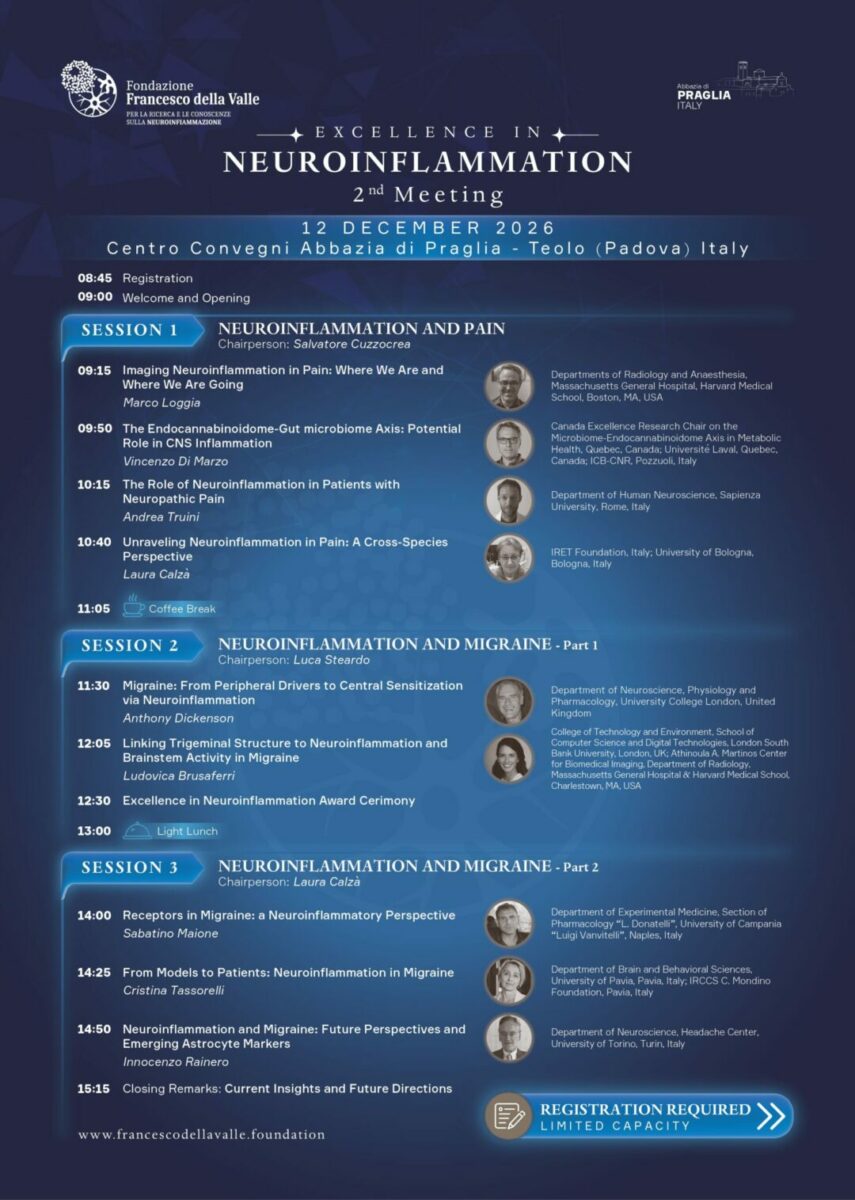
DECEMBER 12, 2026 | PRAGLIA ABBEY (PADUA, ITALY)
A high-level focus on Neuroinflammation in Chronic Pain and Migraine
Young Researcher Support
In keeping with the mission of the Fondazione Francesco della Valle to promote the growth of young scientists, registration is free for participants under 40 years of age; the first 40 young researchers to register will receive one complimentary night of accommodation.
ECM Accreditation pending (for Italian attendees)
The ECM (Continuing Medical Education) accreditation process is currently underway for the following professionals: Medical Doctors (all disciplines), Biologists, Chemists, Pharmacists, and Veterinarians.
Speakers

Ludovica Brusaferri
College of Technology and Environment, School of Computer Science and Digital Technologies, London South Bank University, London, UK;
Athinoula A. Martinos Center for Biomedical Imaging, Department of Radiology, Massachusetts General Hospital & Harvard Medical School, Charlestown, MA, USA
Ludovica Brusaferri is a Senior Lecturer in the School of Computer Science and Digital Technologies at London South Bank University. She graduated in Biomedical Engineering from Sapienza University of Rome (Rome, Italy) and subsequently obtained a PhD in Medical Imaging fromUniversity College London (London, UK), funded by Siemens Healthineers, where she developed mathematical modelling and image reconstruction methods to improve PET quantification in PET/MR imaging. She subsequently joined the Athinoula A. Martinos Center for Biomedical Imaging at Harvard Medical School (Boston, US) as a Postdoctoral Research Fellow, where she expanded her methodological expertise towards clinical applications of PET imaging. Specifically, she contributed to research on neuroinflammation andchronic pain, including a PET/MR clinical trial investigating the effects of a multimodal intervention combining Mindfulness-Based Stress Reduction (MBSR) and transcutaneous auricular Vagus Nerve Stimulation (taVNS) in migraine. During this time, she developed a growing interest in the potential of artificial intelligence to overcome key translational barriers in molecular imaging. Her current research brings together PET physics, deep learning and clinically driven research questions to address key limitations of current molecular imaging protocols, with the broader goal of enabling larger-scale studies of neuroinflammation across diverse patient populations.
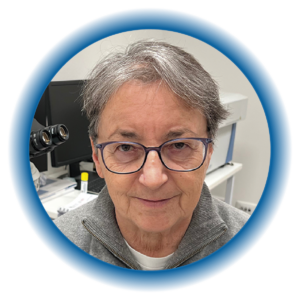
Laura Calzà
IRET Foundation, Italy; University of Bologna, Bologna, Italy
Laura Calzà, MD, is a physician, specialist in Endocrinology, and Professor of Cognitive Sciences at the University of Bologna. She is Scientific Director of the IRET Foundation (Ozzano Emilia, Italy) and of the Montecatone Rehabilitation Institute (Imola, Bologna), a highly specialized hospital for severe brain and spinal cord injuries. She has authored more than 260 peer-reviewed articles and over 60 book chapters, with more than 8,700 citations and an H-index of 51 (Scopus, 2026). She has extensive expertise in neurobiology and translational medicine, including chemical neuroanatomy, behavioral neuroscience, molecular biology, and neural and embryonic stem cell research. Her research focuses on reactive and reparative mechanisms of the nervous system, combining in vivoand in vitromodels within a bench-to-bedside and bedside-to-bench approach. Major research areas include Alzheimer’s disease, multiple sclerosis, traumatic and vascular nervous system injuries, and inflammatory and neuropathic pain. Her laboratory also develops preclinical pipelines for novel drugs, advanced therapies, biomaterials, and biomedical devices, including GLP-and ISO-compliant studies. She is PI or Co-Investigator in numerous competitive national and international research projects.

Vincenzo Di Marzo
Canada Excellence Research Chair on the Microbiome-Endocannabinoidome Axis in Metabolic Health, Québec, Canada;
Université Laval, Quebec, Canada; ICB-CNR, Pozzuoli, Italy
Vincenzo Di Marzo (ChemD from the University of Naples and PhD in Biochemistry from Imperial College in London) is the Canada Excellence Research Chair on the Microbiome-Endocannabinoidome Axis in Metabolic Health (CERC-MEND) at Laval University (Quebec, Canada). He also serves as Associate Research Director at the Institute of Biomolecular Chemistry of the National Research Council (ICB-CNR, Pozzuoli, Italy), where he directs the Joint International Research Unit (MicroMeNu) between the Italian National Research Council and Université Laval. Since October 2024, he has been the president of the Francesco della Valle foundation. Prof. Di Marzo has co-authored more than 900 peer-reviewed articles (H-index 152, >90,600 citations) and has been listed for 11 consecutive years among the Highly Cited Researchers, ranking in the top 0.1% of worldwide scientists. An elected member of both the Italian Accademia dei Lincei and the Belgian Royal Academy of Medicine, he has received numerous accolades, including the prestigious Mechoulam Award. His groundbreaking research achievements include the discovery of endocannabinoid biosynthetic and metabolic pathways, and extensive studies on the interactions between the endocannabinoidome and the gut microbiome in metabolic, inflammatory, and CNS disorders.

Anthony Dickenson
Department of Neuroscience, Physiology and Pharmacology, University College London, United Kingdom
Anthony (Tony) Dickenson, BSc, PhD, FmedSci, FBPharmcolS is Emeritus Professor of Neuropharmacology in the Department of Neuroscience, Physiology and Pharmacology at University College, London, UK. He gained his PhD at the National Institute for Medical Research, London, and has held posts in Paris, California and Sweden. He joined UCL in 1983 and was made Professor in 1995. His research interests are the mechanisms of pain and how pain can be controlled in both normal and pathophysiological conditions, and how to translate basic science to the patient. He has made seminal contributions to the science of pain and its treatments and several of his key studies have become pivotal to clinical pain management. Prof. Dickenson is an Honorary Member of the British Pain Society, was a member of the Council of the International Association for the Study of Pain (IASP) for 6 years and is Section Editor for the journal Pain. He was elected as an Honorary Member of IASP and a Fellow of the British Pharmacological Society. He has authored more than 360 refereed publications with an h index of 113, and given over 650 invited lectures, all due to his motivated and brilliant research team.

Marco Loggia
Departments of Radiology and Anaesthesia, Massachusetts General Hospital, Harvard Medical School, Boston, MA, USA
Marco Loggia, PhD, is a Professor of Radiology and Anaesthesia at Harvard Medical School, and a faculty member of the MGH/HST Athinoula A. Martinos Center for Biomedical Imaging in Boston, MA. He is also the Co-Director of the Center for Integrative Pain NeuroImaging (CiPNI), in Boston, MA. He received his Ph.D. in Neurological Sciences at McGill University under the supervision of Prof. M. Catherine Bushnell, and then held the position of Research Fellow at Brigham and Women’s Hospital, Massachusetts General Hospital and Harvard Medical School. Dr. Loggia’s main research questions focus on the neural and neuroinflammatory mechanisms of pain in humans, which he investigates using a variety of brain imaging and behavioral techniques, such as magnetic resonance imaging, positron emission tomography and quantitative sensory testing. He has published more than 100 peer-reviewed articles, and is a recipient of the 2013 Early Career Award and the 2016 Ulf Lindblom Young Investigator Award for Clinical Science, both from the International Association for the Study of Pain. He serves as a Section Editor for PAIN.
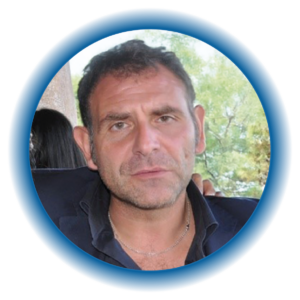
Sabatino Maione
Department of Experimental Medicine, Section of Pharmacology “L. Donatelli”, University of Campania “Luigi Vanvitelli”, Naples, Italy
Sabatino Maione, MD, PhD, is a distinguished Italian pharmacologist and an internationally recognized expert in the neurobiology of pain. He obtainedhis degree in Medicine and Surgery and PhD in Pharmacology and Toxicology from the University of Naples. Since 2007, he has served as a Full Professor of Pharmacology at the University of Campania “Luigi Vanvitelli”. At the same institution, he coordinates a prominent research group focused on pain pharmacology and serves as a clinical director in Pharmacology and Clinical Toxicology. He is also a member of the Scientific Committee of the Francesco della Valle Foundation.Throughout his career, Prof. Maione has established an extensive international research footprint, collaborating with prestigious institutions including University College London, the University of London School of Pharmacy, and Glaxo-Wellcome (UK). He has co-authored nearly400 articles published in peer-reviewed journals. His research primarily investigates neuropathic pain, spinal neuronal apoptosis, and the therapeutic roles of cytokines, glutamate, and cannabinoids. He has coordinated numerous major national research projects (PRIN and FIRB) and holds three patents. He is an active member of several scientific organizations, including the International Cannabinoid Research Society, the Società Italiana di Farmacologia, the New York Academy of Sciences, The Society for Neuroscience, and the British Pharmacological Society.
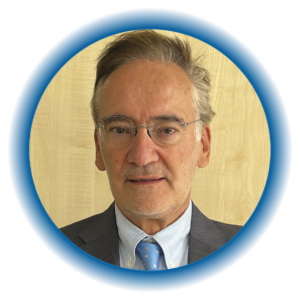
Innocenzo Rainero
Department of Neuroscience, University of Torino; Headache Research Center AOU Città della Salute e della Scienza di Torino, Italy
Innocenzo Rainero is a specialist in Neurology and Clinical Neurophysiology and holds a PhD in Neuroscience. He was a visiting scientist at the National Institute on Aging in Bethesda and a Fellow of the French Foundation for Alzheimer’s Disease in Los Angeles. He is currently Full Professor of Neurology in the Department of Neuroscience at the University of Turin. He heads the Alzheimer’s Disease and Related Dementias Unit and the Headache Clinical Research Centre at the City of Health and Science of Turin, and serves as Scientific Coordinator of the Turin Memory Clinic. His main research interests are the genetics of Alzheimer’s disease and Primary Headaches. He contributed to the identification of the presenilin 1 gene (Nature, 1995), SORL1gene, and several genetic risk factors for Alzheimer’s disease and frontotemporal dementia. In addition, is involved in genetics of migraine and cluster headache and is involved in the study of neuroinflammatory processes in migraine. In 2005, he received the International Cluster Headache Award for his research on HCRTR2gene. He served as principal investigator and work-package leader in several Italian and European research projects, including Horizon 2020 programmes. At present, President of the Italian Society for the Study of Headaches.
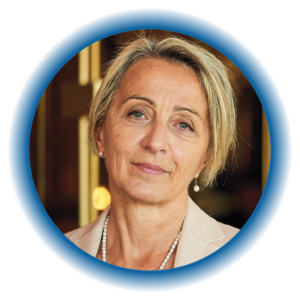
Cristina Tassorelli
Department of Brain and Behavioral Sciences, University of Pavia, Pavia, Italy; IRCCS C. Mondino Foundation, Pavia, Italy
Cristina Tassorelli received her Medical Degree summa cum laude from the University of Pavia, Italy, where she also completed her training in Neurology. She obtained a PhD in Human Psychobiology from the University of Modena and subsequently completed a postdoctoral fellowship at the Department of Neuroscience, University of Rochester, NY, USA. She has held several leadership positions in national and international scientific organizations. She is a former member of the Board of Directors of the International Headache Society (IHS) and previously chaired the IHS Clinical Trials Guidelines Committee. She served as President of the International Headache Society from 2021 to 2023 and as President of the Italian Association of Full Professors of Neurology from 2022 to 2023. She is also a founding member of the European Headache Alliance. She has coordinated and participated in numerous competitive research grants funded by the European Union, the Migraine Research Foundation, the Italian Ministry of Health, the Italian Ministry of University and Research, and the Italian Agency for Development Cooperation. Her scientific activity focuses primarily on headache disorders and translational neuroscience. She has authored more than 500 papers in peer-reviewed international scientific journals, as well as several books and book chapters.
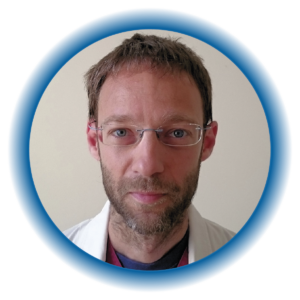
Andrea Truini
Department of Human Neuroscience, Sapienza University, Rome, Italy
Andrea Truini is Professor of Neurology in the Department of Human Neurosciences at Sapienza University of Rome, Italy. He has extensive experience in translational and clinical research on neuropathic pain and painful neuropathies.
Chairpersons
Laura Calzà
IRET Foundation, Italy; University of Bologna, Bologna, Italy
Laura Calzà, MD, is a physician, specialist in Endocrinology, and Professor of Cognitive Sciences at the University of Bologna. She is Scientific Director of the IRET Foundation (Ozzano Emilia, Italy) and of the Montecatone Rehabilitation Institute (Imola, Bologna), a highly specialized hospital for severe brain and spinal cord injuries. She has authored more than 260 peer-reviewed articles and over 60 book chapters, with more than 8,700 citations and an H-index of 51 (Scopus, 2026). She has extensive expertise in neurobiology and translational medicine, including chemical neuroanatomy, behavioral neuroscience, molecular biology, and neural and embryonic stem cell research. Her research focuses on reactive and reparative mechanisms of the nervous system, combining in vivoand in vitromodels within a bench-to-bedside and bedside-to-bench approach. Major research areas include Alzheimer’s disease, multiple sclerosis, traumatic and vascular nervous system injuries, and inflammatory and neuropathic pain. Her laboratory also develops preclinical pipelines for novel drugs, advanced therapies, biomaterials, and biomedical devices, including GLP-and ISO-compliant studies. She is PI or Co-Investigator in numerous competitive national and international research projects.
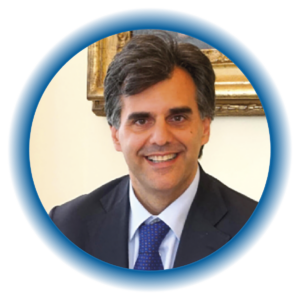
Salvatore Cuzzocrea, MD, PhD
Department of Chemical, Biological, Pharmaceutical and Environmental Sciences, University of Messina, Italy
Salvatore Cuzzocrea is Full Professor of Pharmacology at the University of Messina, a position he has held since 2011, following earlier appointments as Associate Professor (2002–2011) and Researcher (1999–2002). He earned his degree in Pharmacy from the University of Messina in 1995 and a PhD in Experimental Medicine in 1999, with doctoral training at Children’s Hospital Medical Center, Cincinnati, and at The William Harvey Research Institute (St. Bartholomew’s and Royal London School of Medicine and Dentistry). In 2014 he also obtained a Medicine degree through a joint Tirana–Tor Vergata program. His research focuses on inflammation, shock, and free radical biology, with particular emphasis on the pharmacological modulation of oxidative stress and endotoxin-driven pathways in cardiovascular, renal, and neurological disease models —work situated at the interface of experimental pharmacology and translational medicine. Internationally, he holds appointments as Honorary Professor at the University of Manchester, UK, and Adjuvant Professor at Saint Louis University, USA. A Fellow of the British Pharmacological Society since 2017, he served as President of the European Shock Society (2009–2011). With 1024 publications, an h-index of 105, and nearly 54,000 citations (Scopus), his profile ranks among the most cited in pharmacology internationally.
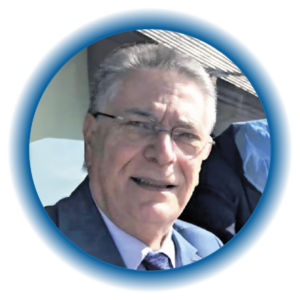
Luca Steardo
Department of Physiology and Pharmacology “Vittorio Erspamer” Sapienza University of Rome, Italy
Luca Steardo began his academic career as Assistant Professor of Neurology at the University of Naples Federico II, where he founded and initially directed the University Headache Center. He subsequently pursued research at the NIH in Bethesda and held visiting appointments at Harvard University and the Department of Neurophysiology, University of Oxford. Upon returning to Italy, he became Full Professor of Pharmacology and Therapeutics and later held a Chair at Sapienza University of Rome. He is currently Full Professor of Psychiatry and a member of Academia Europaea. Following a longstanding interest in the role of neuropeptides in the pathophysiology of neurological and psychiatric disorders, his research progressively shifted toward understanding the contribution of non-neuronal cells to brain pathobiology, initially in neurological and subsequently in psychiatric diseases. A defining feature of his scientific career has been the integration of mechanistic studies in experimental disease models with clinical investigation in humans.
The Meeting Venue
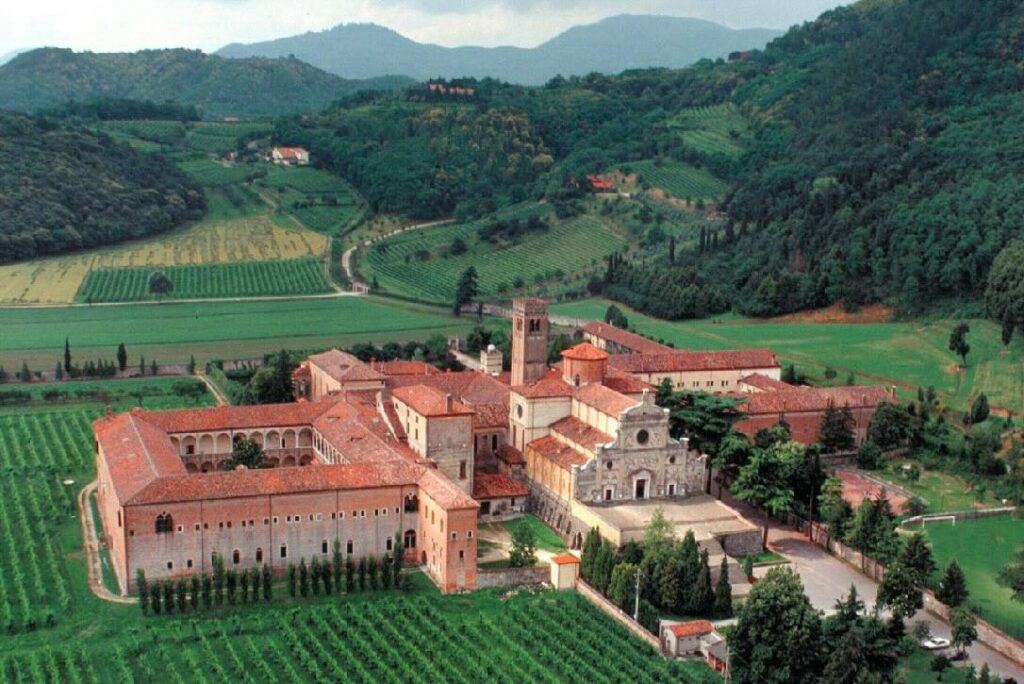
Praglia Abbey (Italian: Abbazia di Praglia) is a Benedictine monastery located at the foot of the Euganean Hills, about 12 kilometers southwest of Padua, Italy.
Originally founded in 1080, the Abbey features a harmonious blend of medieval and Renaissance architecture.
One of the Abbey’s treasures is its 16th-century library, whit approximately 120,000 volumes and a renowned book and paper restoration laboratory, active since 1951. To date, nearly 30,000 cultural heritage items have been restored by the monks, who still carry on this tradition today.
Now one of Italy’s largest Benedictine communities, Praglia also serves as a retreat and conference center. Its flexible meeting spaces, surrounded by a peaceful park, offer an ideal setting for reflection and discussion.
Why this Venue?
In the late 1980s and early 1990s, Francesco della Valle established the International School of Neuroscience at Praglia Abbey. The school was co-founded and coordinated by his mentor, the renowned Italian-American neurologist Erminio Costa.
This prestigious school hosted some of the leading neuroscientists, including Nobel Laureate Gerald Edelman and Dennis W. Choi, who in his autobiography wrote1:
“Around the late 1980s… giving lectures on brain science while watching monks work under the sunlight as the monastery bells rang, I felt connected to timeless human endeavors: beekeeping, the pursuit of knowledge.”

